Developer diary
Notes from the workshop
Notes on developing, testing and making gadgets.
The measuring rig — building it and the first measurements
It took a while, but the preamplifier board was designed, a measurement microphone and two capsules to build into artificial ears were ordered, and the silicone ears themselves were bought too. A preamplifier board with phantom power was designed. A simple rig for the experiments was designed and printed.
QymBudsAir 1.0 TWS Bluetooth — where things stand
Work on QymBuds Air is in full swing, and only the delivery times for new board revisions are dragging the process out. There have already been three trial batches of boards. Right now we have a working alpha version of the wireless earphones with minor flaws. What went wrong and what had to be got past — read on.

QymBuds Air is happening!
Despite all the difficulties, the wireless TWS earphones QymBuds Air are happening! Yes, you read that right — True Wireless Stereo. It means there will be no wires at all: none to the playing device and none between the left and the right cup. The cups are completely independent of each other, each has its own battery and can play music on its own. Getting there was far from easy.
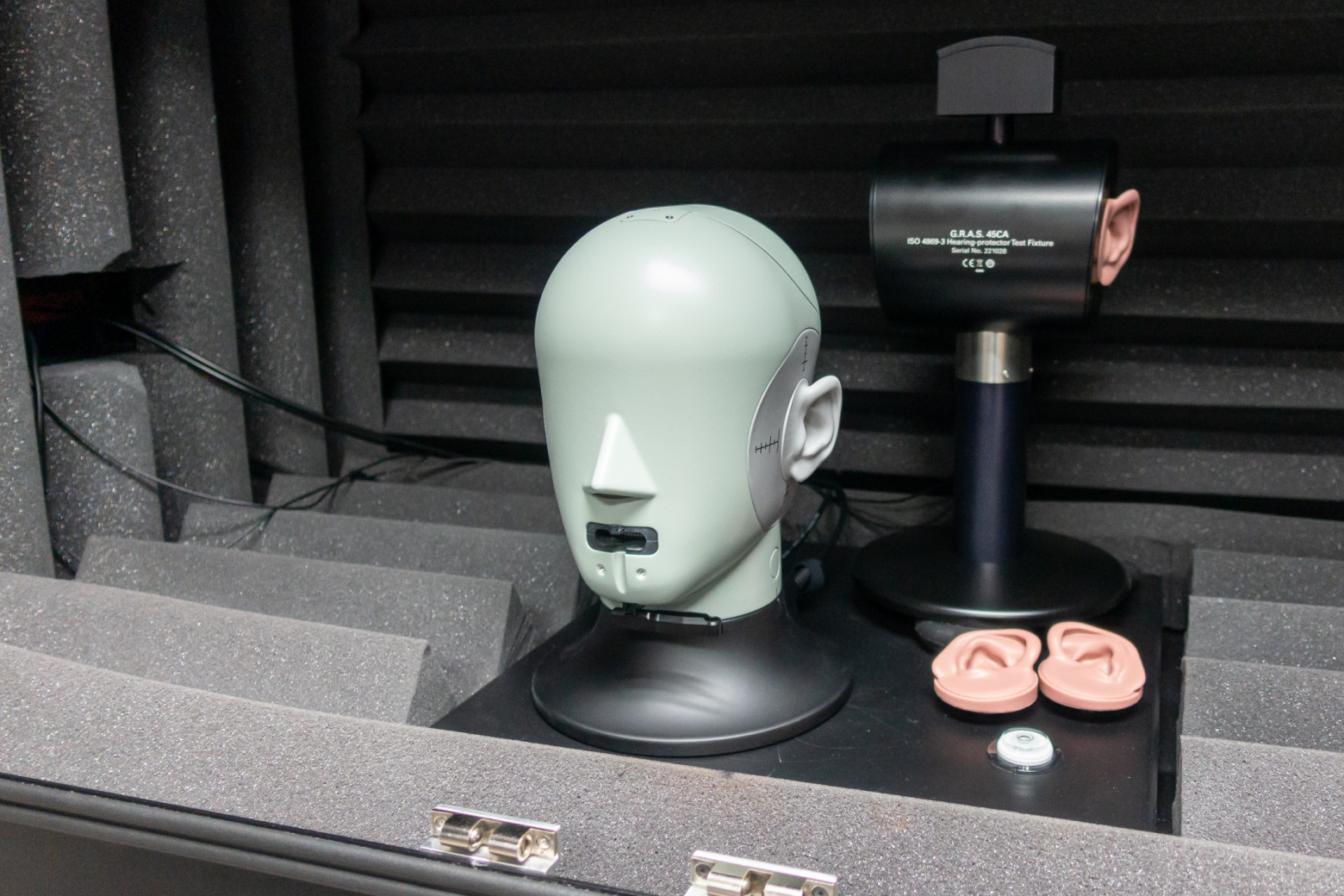
And how do we measure the frequency response of drivers while imitating an ear canal?
Oh Google, it knows and it will tell. I read up and understood: professional rigs that imitate a human head with ears cost unreal money. People online get around it as best they can: they sculpt ears out of plasticine, take casts of their own ear canals (hello to the surgeon with the plasticine stuck in an ear). But the main thing I took from all those articles is that the frequency response depends on how the headphones sit on the rig and how hard they are pressed. On top of that, everyone who has built such a rig says the same thing: it is all subjective. So getting sensible measurements out of the drivers and the headphones themselves will be, let us say, unrealistic. The length and the shape of the ear canal differ from person to person, and so does the shape of the outer ear. Which means the same headphones will sound different to different people. But we have been in tighter spots — below the cut are some thoughts on what a rig needs and how we are going to try to measure.