And how do we measure the frequency response of drivers while imitating an ear canal?
Oh Google, it knows and it will tell. I read up and understood: professional rigs that imitate a human head with ears cost unreal money. People online get around it as best they can: they sculpt ears out of plasticine, take casts of their own ear canals (hello to the surgeon with the plasticine stuck in an ear). But the main thing I took from all those articles is that the frequency response depends on how the headphones sit on the rig and how hard they are pressed. On top of that, everyone who has built such a rig says the same thing: it is all subjective. So getting sensible measurements out of the drivers and the headphones themselves will be, let us say, unrealistic. The length and the shape of the ear canal differ from person to person, and so does the shape of the outer ear. Which means the same headphones will sound different to different people. But we have been in tighter spots — below the cut are some thoughts on what a rig needs and how we are going to try to measure.
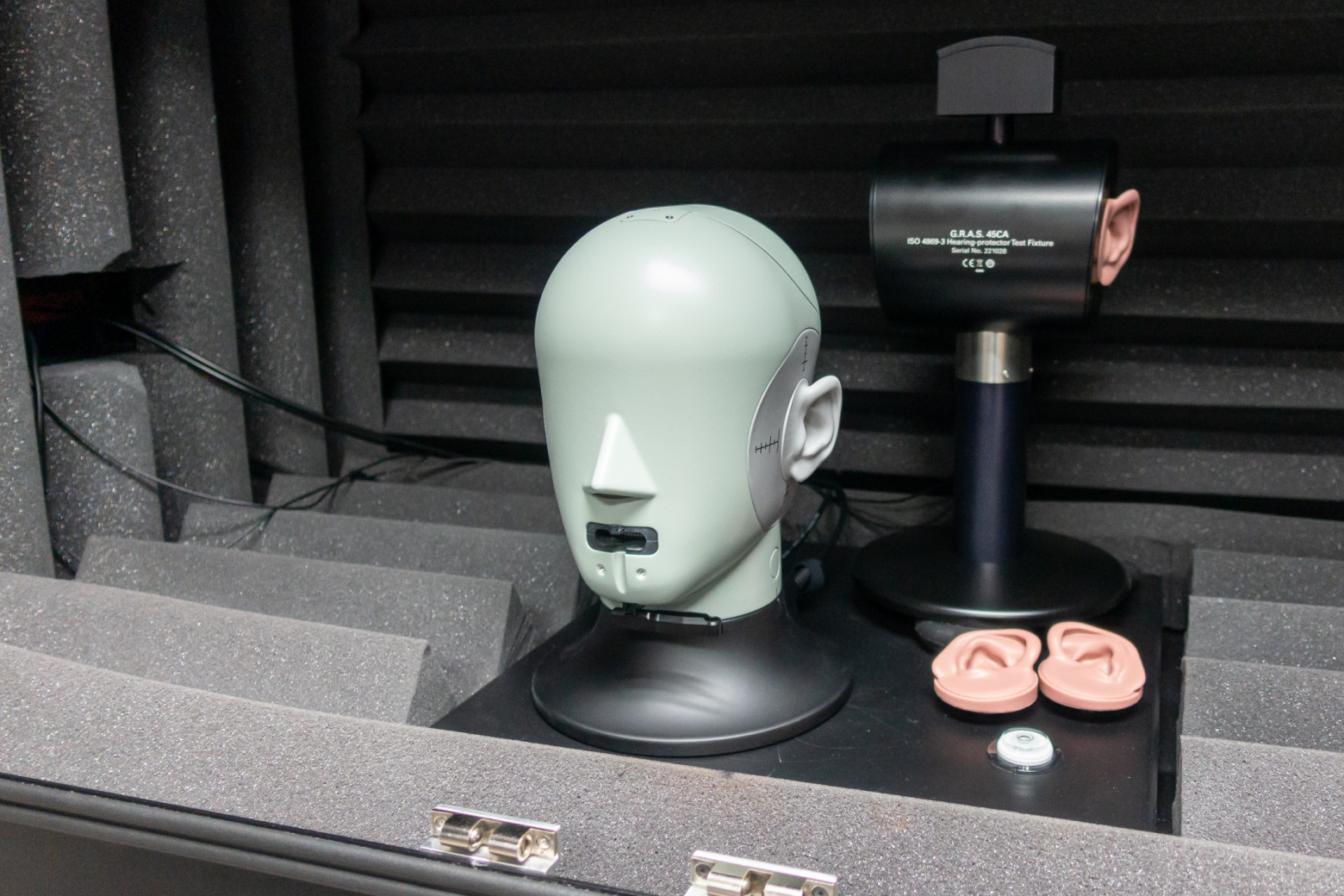
As soon as the articles were read, a small plan for building the measuring rigs started to take shape in my head. Yes, I think two rigs are needed.
The first rig is a tube with the same diameter as the driver, with a measurement microphone at the far end.
The second rig: order two silicone ears from AliExpress (yes, they sell those too), two microphone capsules, print a mock-up of a head, glue the ears on, put the capsules into the ears, and done. Well, well — if only it were that simple. In practice it would be good to calibrate against something known. So we need a driver with a measured frequency response we can trust, and headphones with that driver whose response is also already known. In any case, as written above, the frequency response of headphones is largely subjective, provided of course there are no obvious peaks or roll-offs. So for comparative tests this scheme will do:
- Build the rigs.
- On the rigs, measure the response of a driver and of headphones with known figures.
- Compare what we measured with what is known and calibrate RMAA.
- Measure our own drivers and headphones.
- Look at the results and either start crying or celebrate.
Naturally we will need to build a phantom power circuit for the capsules and a microphone preamplifier, and possibly find a sound card if the built-in one turns out to be unfit for measuring. But that is for the next article.
Comments (0)
Оставить комментарий
No comments yet. Be the first.